Sideshow Angelo: Why North Burlington’s Leading Tax Contributor is the Last Priority at City Hall


As the 2026 municipal election approaches, the political divide in Burlington is becoming defined by a stark contrast between who pays the bills and who sees the benefits. Ward 6 stands as one of the most significant pillars of the city’s residential tax base. It is home to high-value properties that consistently fuel the municipal coffers. Despite this massive financial input, there is a glaring disconnect between the revenue generated north of Highway 5 and the infrastructure priorities approved at City Hall. While the mayor’s office continues to prioritize high-profile, southern-focused legacy projects, the families in the north are left wondering why basic safety and community services in their own neighborhoods are treated as disposable during budget deliberations.
The political optics are particularly damaging for Councilor Angelo Bentivegna, whose reputation as a budget hawk often appears to come at the expense of his own constituents' daily safety. This performance has earned him the nickname Sideshow Angelo among critics who have noted his apparent inability to host his own independent community events. He instead chooses to perpetually jump onto the mayor’s projects and ribbon-cuttings. In recent budget cycles Angelo has targeted essential local services for cuts. This included the controversial proposal to eliminate city-funded snow clearing on school walkways in Alton Village. This move directly impacted the safety of students and parents in one of the city's fastest-growing northern communities. To the residents of Ward 6, these attempts to shave relatively small amounts from the operating budget feel like a targeted tax on their quality of life, especially when juxtaposed against the massive capital outlays he has supported elsewhere.
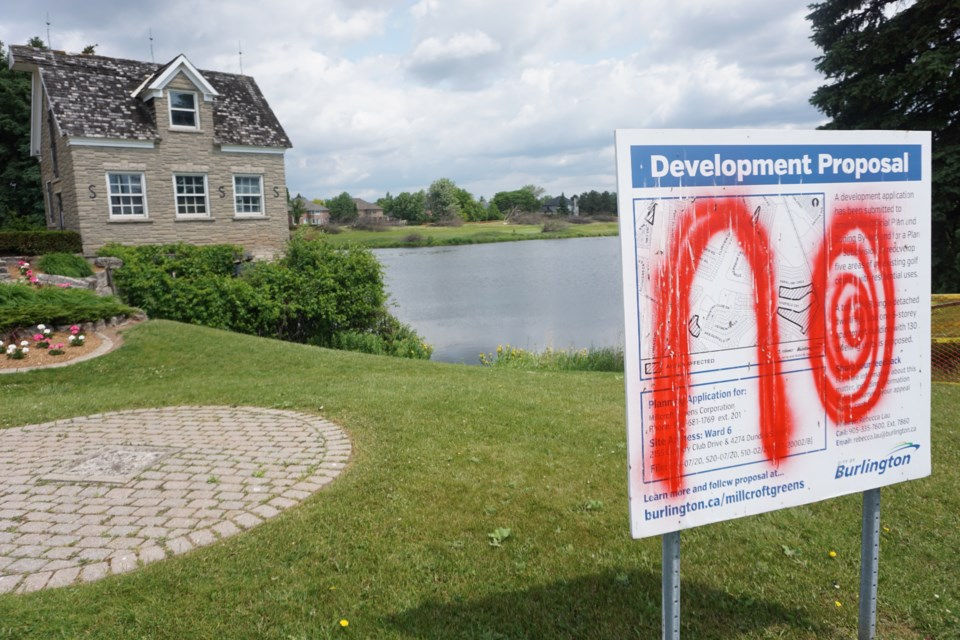
This voting record highlights a troubling pattern for Angelo, revealing a representative who appears fundamentally unable to advocate for his ideas or build the necessary consensus among his council colleagues. His performance during recent budget deliberations has exposed a profound lack of influence. He frequently finds himself cast as a solitary figure unable to convince even a single peer to support his vision for the city. When he moved to eliminate city-funded school snow clearing in Alton Village the measure was defeated with him as the lone "yes" vote. This isolation was repeated when his motions to cut $30,000 from corporate engagement and $100,000 from the Urban Forestry Master Plan were both resoundingly rejected by a unified council. These solitary defeats serve as undeniable proof that his colleagues do not view his proposals as viable or persuasive. This performative approach suggests that he likely knows these motions will never pass, much like his highly publicized but ultimately ineffective opposition to the Millcroft development. They are there to serve more as a theatrical gesture for the cameras than a genuine attempt at legislative change. His record shows he is a politician who stands alone on the small issues yet chooses to blend into the crowd when it comes time to rubber-stamp the mayor’s multi-million-dollar legacy projects in the south, such as the $40 million Skyway Community Centre and the $100 million-plus debt for the Robert Bateman site. If the price tag of these two projects was combined it would constitute the entire capital purposes budget. The same one robbed to fund these projects that is experiencing a $105M shortfall.
To the residents north of Highway 5, the math simply doesn’t add up. Their representative is willing to approve massive debt and reserve fund expenditures for southern amenities while simultaneously suggesting that their children’s snowy walk to school is a cost the city can no longer afford.
The divide created by Highway 5 is more than just geographic; it has become a symbol of infrastructure inequity. As regional growth sends a surge of cut-through traffic into the northern rural corridors, the lack of high-visibility safety technology and traffic calming measures has turned local roads into dangerous thoroughfares. The injuries and fatalities have already started. The juxtaposition is hard to ignore: a ward that effectively subsidizes the city's expansion is being forced to wait at the back of the line for essential protection. This silent partner arrangement, where Ward 6 pays the bills while the south reaps the benefits, is no longer sustainable. If the current representation continues to favor the mayor’s southern optics over northern lives, the 2026 election may serve as a necessary correction to a government that has forgotten which residents are actually keeping the city's budget healthy.


It's obvious to residents of Ward 6 that they don't register on Meed Ward's radar. She's played favourites for a long time.